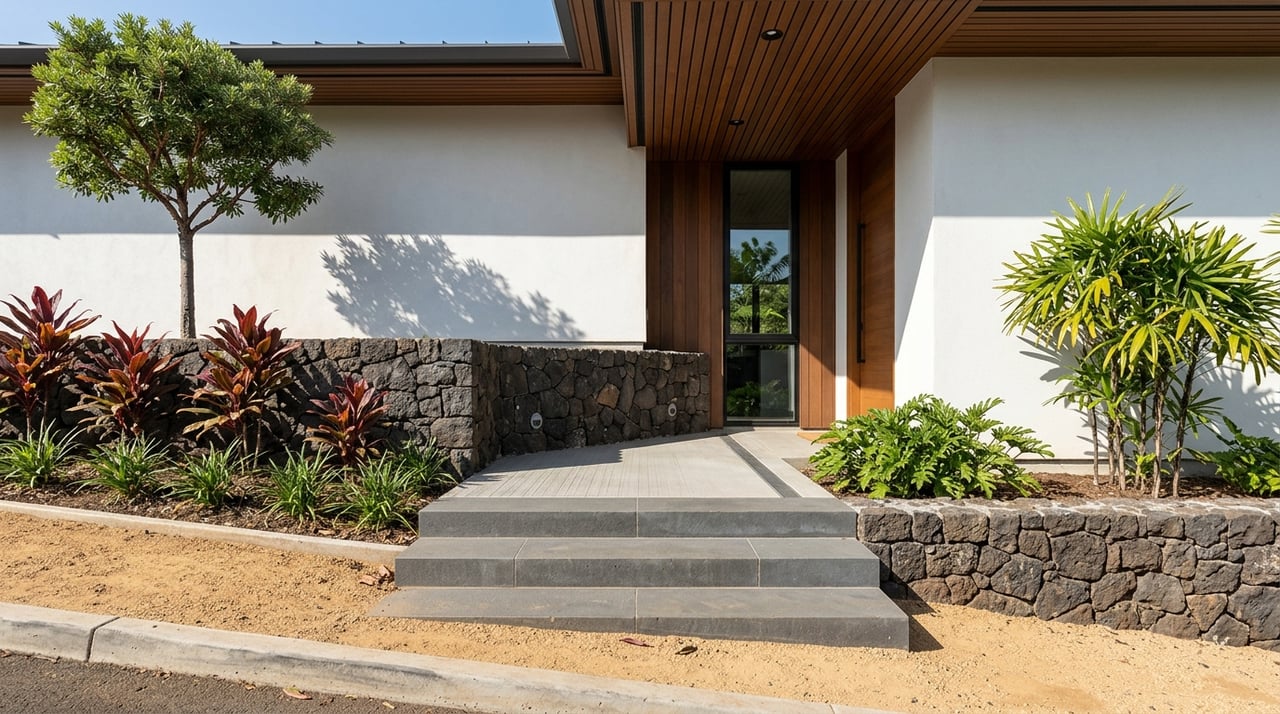
Thinking about building on Kula’s hillsides? It is easy to fall in love with the views and open space, then assume the next step is choosing a floor plan. In reality, a custom build in Kula usually starts with the land itself, not the house design. If you are exploring a purchase or planning your next move, this guide will help you understand the key checkpoints before you invest time and money. Let’s dive in.
Why Kula hillside planning is different
Kula falls within the Makawao-Pukalani-Kula community plan area, where county planning documents say the rural and agricultural atmosphere should be retained. That means a custom home project is not just about what you want to build. It is also about how the home fits the parcel, the infrastructure, and the surrounding upcountry setting.
Compared with a simpler infill lot in a more urban area, Kula hillside parcels often require more upfront review. Water availability, wastewater planning, grading, drainage, and wildfire readiness can shape the project long before architectural plans are finalized.
Start with parcel due diligence
Before you sketch layouts or price finishes, focus on the parcel’s buildability. In Kula, four early checkpoints tend to matter most: zoning and land use, water, wastewater, and slope-related site work.
Confirm zoning and land-use status
Maui County says its digital zoning maps are general references only. Final confirmation should come through the County’s Zoning and Flood Confirmation Form, which is designed to verify zoning, community plan, state land use district, flood zone, and special districts for a parcel.
This step matters because assumptions can get expensive. If your planned use does not fit current zoning, the path may involve land-use entitlement processes such as a change in zoning, a community plan amendment, or a state land use district boundary amendment.
Understand the water path early
Kula is served by the Upcountry Water System, and water access can be one of the biggest factors in a hillside build. Maui County reviews water requests against the Upcountry Priority List, and the County states it has not accepted new applications for placement on that list since January 1, 2013.
A water request also depends on current system conditions. The parcel generally must be within service limits, next to a distribution main with adequate pressure, and the department must have sufficient supply and capacity for domestic, irrigation, and fire-protection service.
For buyers, this means water should be checked early, not after design work begins. A beautiful lot is not the same thing as a ready-to-build lot.
Plan for wastewater, not a new cesspool
For a new custom home, a new cesspool is not an option. Hawaiʻi Department of Health rules say no cesspool may be used by a new building, and new cesspools may not be constructed.
Instead, a new home is generally expected to use an individual wastewater system such as a septic tank or aerobic treatment unit. The Department of Health recommends hiring a Hawaiʻi-licensed civil engineer to develop that plan, which is especially important on hillside parcels where placement and site conditions can affect approvals.
If you are looking at a rebuild or resale situation involving an existing cesspool, separate guidance may apply in specific wildfire-affected scenarios. Still, that does not change the rule for new construction.
Review grading, drainage, and slope exposure
Hillside lots often bring more engineering and permit work than buyers expect. Maui County requires a grading permit for excavation or fill, and a grubbing permit when vegetation is uprooted.
For major grading work, the County’s checklist calls for licensed-engineer plans that can include an erosion control plan, drainage plan and report, and a soils report when cuts or fills exceed 15 feet. In some cases, an engineering slope hazard report may also be required.
The County’s steep-terrain ordinance is aimed at protecting life and property from hazards tied to slope, unstable soils, erodible soils, and earth movement. If grading affects an existing slope higher than 15 feet and steeper than 35 percent, an engineering slope hazard report may be required.
Check flood status too
Even in an upcountry location, flood status still needs to be verified parcel by parcel. Maui County requires a flood development permit for man-made changes such as buildings, walls, filling, grading, excavation, or paving within a special flood hazard area.
That is one more reason to verify flood information at the start. It is much easier to build your planning around the parcel’s actual conditions than to revise plans later.
Wildfire planning should be built in
On Kula’s hillsides, wildfire planning is not a side note. It should be part of your early site strategy.
Maui County’s fire code requires brush clearance and firebreaks around buildings in hazardous fire areas, generally within 30 feet of structures. In extra-hazardous conditions, that clearance can extend up to 100 feet.
The County’s wildfire guidance also recommends a 30-foot first zone and a fire-free area within 5 feet of the home. For a custom build, that can influence landscape design, site layout, and how you think about defensible space around the structure.
Build your team before design gets too far
A strong Kula build usually starts with the right professionals at the right time. Waiting too long to involve site and permit experts can lead to redesigns, delays, or avoidable costs.
Key professionals to line up
The exact team depends on the parcel and project scope, but these are often the most important early players:
- A civil engineer
- A licensed contractor
- A surveyor, if needed for boundary or site work
- Design professionals working from verified parcel conditions
For permit work in Maui County, Development Services Administration administers the county’s subdivision, building, electrical, plumbing, grading, and other construction-related ordinances. County materials state that permit review uses the post-October 28, 2023 code set, including the 2018 IBC and IRC and the 2018 IECC with Maui amendments.
Why licensed contractors matter
Hawaiʻi requires a licensed contractor for any project over $1,500 in labor and materials or for any project that needs a building, electrical, or plumbing permit. The state also notes that licensed contractors carry insurance and can obtain and sign building permits.
For owners, this is both a legal and practical issue. It is wise to verify contractor and professional license status before signing agreements, especially on a build where earthwork and infrastructure can be as important as the structure itself.
Know the permit reviews involved
A Kula custom home may involve more than a standard building permit review. Depending on the parcel and scope, county and state review can include Fire Prevention, Planning, Water Supply, Health, and DLNR.
If the parcel is being created, consolidated, or served by a new access or easement pattern, subdivision review may also come into play. Maui County says preliminary subdivision approval is due within 45 calendar days after a complete submittal.
The main takeaway is simple: your timeline may depend on more than house plans. Site conditions and agency coordination often drive the schedule.
A practical timeline to expect
No two hillside builds move at the same pace, but it helps to think in phases. In Kula, the project often turns on water service, grading complexity, and whether wastewater or subdivision approvals need to happen first.
Phase 1: Due diligence
This is when you confirm zoning, flood status, water path, wastewater approach, and grading exposure. It is also the time to decide whether the parcel fits your goals before you commit to major design costs.
Phase 2: Concept design
Once the parcel checks out, your team can start shaping the home around the site. On a hillside lot, smart design usually follows infrastructure realities, access, drainage, and defensible-space planning.
Phase 3: Consultant reports
This phase may include civil engineering work, drainage planning, erosion control, soils analysis, wastewater system planning, and slope-related reporting if required. These reports often become the foundation for permit submissions.
Phase 4: Permit review
Maui County states that a building permit is required for construction, alteration, moving, demolition, repair, and use of any building or structure. Depending on the lot, grading or flood-related permits may also be needed.
Phase 5: Site work and vertical construction
Once permits are in place, the project can move into grading, utility coordination, foundation work, and vertical construction. On hillside lots, this stage can be especially sensitive to drainage and access logistics.
Phase 6: Final closeout
The finish line is not just the last day of construction. County permit materials show that certificate-of-occupancy handling is part of the building permit workflow, making final approval the last major checkpoint before occupancy.
It is also worth knowing that Maui County says a building permit expires after five years if the work is not completed. The County’s flood development permit carries the same five-year expiration period.
What buyers should verify before buying land
If you are shopping for a Kula lot, here is the simplest way to protect yourself before getting attached to a vision:
- Verify zoning and flood status with the County
- Ask about the parcel’s water service path and service conditions
- Confirm the likely wastewater option for a new home
- Review the lot’s grading and slope complexity
- Understand wildfire clearance expectations around the future home
- Ask whether subdivision, access, or easement issues could affect the timeline
These checks can help you separate a promising parcel from one that may require more time, cost, or risk than you expected.
Why local, construction-informed guidance helps
A custom home build in Kula is rarely just a real estate decision. It is a land, permitting, infrastructure, and planning decision all at once.
That is where local, construction-aware guidance can make a real difference. When you understand the lot before you fall in love with the design, you can make better decisions, ask sharper questions, and move forward with more confidence.
If you are considering a Kula land purchase or planning a custom build, working with someone who understands both Maui real estate and construction can help you see the full picture early. When you are ready for thoughtful, hands-on guidance, connect with Lena M. Taberna.
FAQs
What should you check before buying a hillside lot in Kula?
- Verify the parcel’s zoning, flood status, water service path, wastewater option, grading exposure, and wildfire planning needs before assuming it is ready for a custom home.
How does water service affect a custom home build in Kula?
- Kula is part of the Upcountry Water System, and water service depends on service limits, nearby distribution infrastructure, pressure, and available system capacity.
Can you build a new cesspool for a custom home in Kula?
- No. Hawaiʻi rules state that new cesspools may not be constructed, so a new custom home generally needs an individual wastewater system such as a septic tank or aerobic treatment unit.
When is a grading permit needed for a Kula hillside build?
- Maui County requires a grading permit for excavation or fill, and larger grading projects may also require engineer-prepared plans, drainage reports, soils reports, and possibly a slope hazard report.
How does wildfire planning affect a new home in Kula?
- Maui County requires brush clearance and firebreaks around buildings in hazardous fire areas, generally within 30 feet of structures, with more clearance possible in extra-hazardous conditions.
How long does a Maui County building permit stay active for a new home build?
- Maui County states that a building permit expires after five years if the work is not completed.